
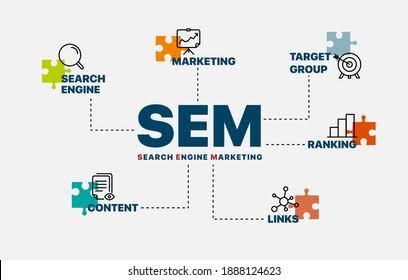
In today’s competitive digital landscape, businesses need effective strategies to reach potential customers online. One of the most powerful methods is Search Engine Marketing (SEM). SEM is a digital marketing technique that uses paid advertisements to improve a website’s visibility on search engine results pages. By targeting users who are actively searching for specific products or services, businesses can attract qualified traffic and increase sales.
Search Engine Marketing primarily involves pay-per-click (PPC) advertising, where advertisers pay only when someone clicks on their ad. Businesses bid on keywords that are relevant to their products or services, allowing their ads to appear at the top of search engine results. This targeted approach helps companies connect with customers who already have an interest in what they offer.
One of the major advantages of SEM is its ability to deliver immediate results. Unlike Search Engine Optimization (SEO), which may take months to improve organic rankings, SEM campaigns can generate website traffic as soon as the ads are launched. This makes SEM an excellent choice for businesses promoting new products, seasonal offers, or time-sensitive campaigns.
Another benefit of Search Engine Marketing is precise audience targeting. Advertisers can target users based on factors such as location, language, device type, demographics, and search behavior. This ensures that marketing budgets are spent on reaching the most relevant audience, improving the chances of conversions and maximizing return on investment (ROI).
Effective keyword research is the foundation of a successful SEM campaign. Choosing the right keywords helps businesses display their ads to users with high purchase intent. In addition, creating compelling ad copy with clear headlines and strong calls to action encourages users to click on the advertisement. Optimized landing pages also play an important role in converting visitors into customers by providing relevant information and a seamless user experience.
SEM campaigns offer valuable performance data through analytics tools. Businesses can monitor impressions, clicks, click-through rates, conversion rates, and advertising costs in real time. These insights allow marketers to optimize campaigns, adjust bidding strategies, and improve overall performance.
Despite its many advantages, SEM requires careful planning and budget management. Poor keyword selection, weak ad copy, or ineffective landing pages can reduce campaign effectiveness and increase advertising costs. Continuous testing and optimization are essential for achieving the best results.
In conclusion, Search Engine Marketing is an effective digital marketing strategy that helps businesses increase online visibility, attract qualified customers, and generate measurable results. When combined with strong keyword research, engaging advertisements, and continuous optimization, SEM can significantly enhance brand awareness, drive website traffic, and contribute to long-term business growth.